






Unleashing the power of DC buildings
Electrification of tomorrow
25/07/2023
The world already runs on DC. Nexans makes the switch simple, safe and ready to install, with Current/OS-compliant cables designed for DC microgrids in buildings, data centers and beyond.

Buildings account for 30% of global energy demand. Most of that energy is wasted converting AC to DC, because 70% of devices already run natively on DC. Eliminating that conversion chain is the single biggest efficiency gain available in building electrification today.
of devices in buildings natively operate on DC
more power transmitted through the same copper cross-section,
at 700 V and 350 V DC respectively
energy losses vs. traditional AC conversion chains (ASE)
DC is not a niche experiment. With solar, EV and storage markets converging, DC infrastructure is becoming the backbone of modern energy systems, driven by structural regulatory and industrial forces.
The EU surpassed its 380 GW solar target ahead of 2025 and has set a new objective of at least 700 GW by 2030. The EU Solar Energy Strategy references 600 GW in AC terms, equivalent to 700 GW when measured in DC, as is standard in the industry. All of it generates DC natively, creating direct demand for compatible distribution infrastructure in buildings and along linear routes.
The IEA projects over 250 million electric vehicles on the road globally by 2030, representing 40% of all new car sales worldwide. Every one of them needs to charge, and DC fast charging is the most efficient way to connect solar generation, battery storage and vehicles within a single building energy system.
Global energy storage capacity must increase sixfold to 1,500 GW by 2030 to support the tripling of renewable energy capacity committed at COP28. Batteries account for 90% of that increase, and battery storage systems operate natively on DC. As storage scales worldwide, DC distribution becomes the natural and most efficient architecture to connect batteries, solar generation and building loads within a single integrated system.
Nexans DC Series cables are the only cables specifically designed and tested for DC building microgrids, Current/OS compliant, certified CPR Dca s2d2a2, and developed alongside the DC ecosystem leaders shaping tomorrow’s standards. As a member of the Current/OS Foundation, Nexans is committed to designing cable systems that are compatible and optimized with future DC building infrastructures, contributing to the unified standards and interoperability frameworks the industry needs to make DC in buildings a reality at scale.
Quick to install
Rip-cord feature enables knife-free stripping. Class 2 flexible conductors ease routing in tight spaces. Nexans offers a complete cable range covering all DC building architectures, from backbone distribution to last-mile connections. Drum management compatible with Mobiway logistics solutions.

Lower carbon, circular by design
Nexans DC cables transmit more power with less copper than equivalent AC cables. Our manufacturing commitment includes a minimum 30% recycled copper content (mass-balance certified) and third-party verified Environmental Product Declarations (EPDs). A measurably lower carbon footprint from conductor to installation. Third-party verified EPDs available for all DC Series references.

Tested compatibility, zero risk
Nexans DC Series cables are deployed in real building demonstrators within the Shift2DC European project, the largest DC building standardisation initiative in Europe, interfacing with equipment from Schneider Electric, Winline, AmperNext, NetPower, Pylontech and Watt & Well. Real-world validation, not just lab certification. Pilot success stories with Vinci Energies and DC Systems.
Protecting people & assets
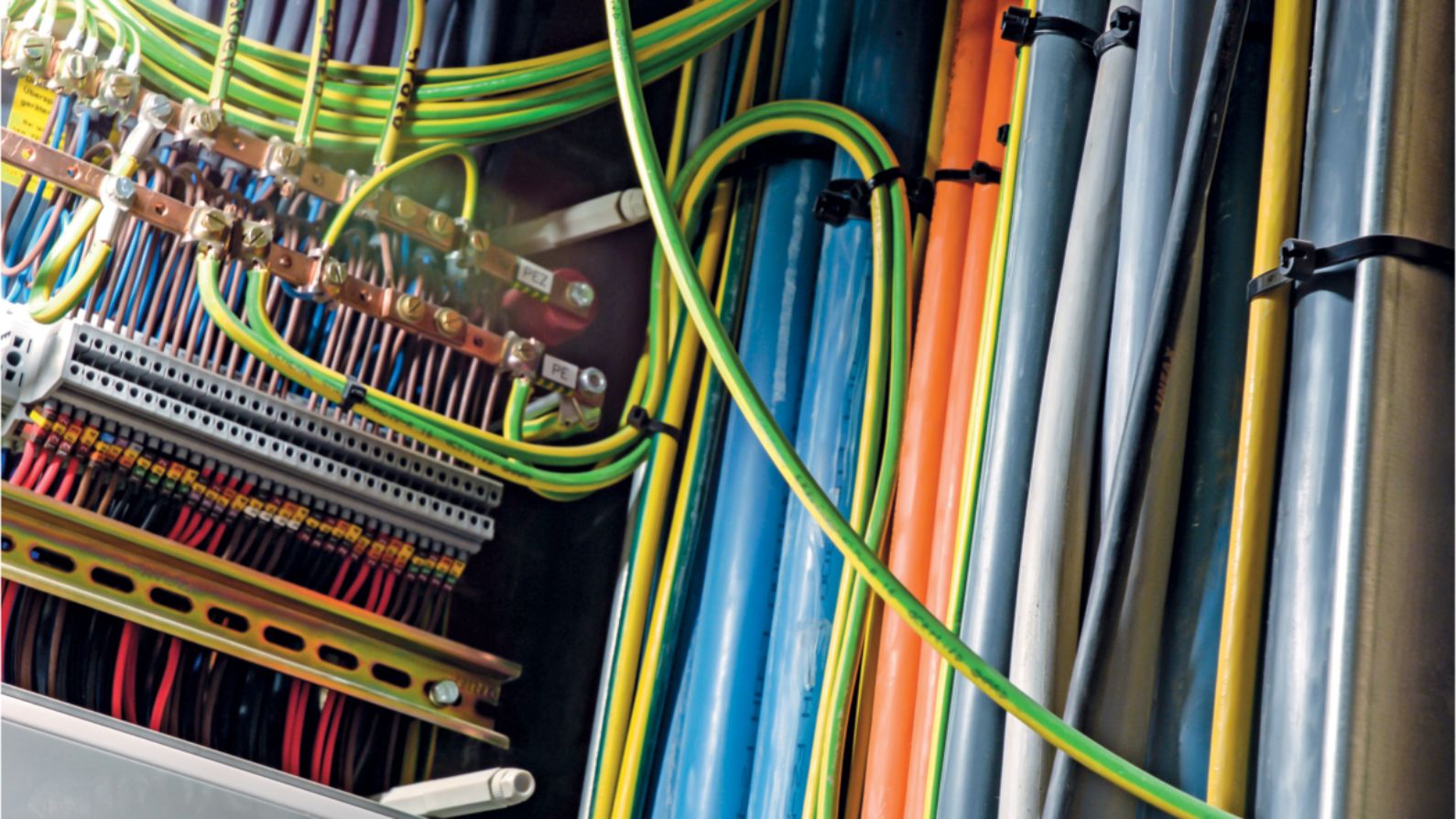
DC can be more hazardous than AC when not correctly managed. Our inter-tripping wire is embedded directly in the cable, not an add-on, ensuring safe de-energization during maintenance across all connected sources simultaneously. Safety integrated at product level, not system level.
Backed by a sustainability leader
Nexans DC cables are produced with sustainability at their core. Our Swedish manufacturing site operates on 100% renewable energy and Nexans holds an EcoVadis score of 78/100, placing the Group among the top performing companies assessed in its sector worldwide. Third-party verified Environmental Product Declarations (EPDs) are available for all DC Series references, supporting your CSRD reporting and green taxonomy requirements.

Hyperscale & edge data centers
AI-driven workloads are reshaping data center electrical architectures. As rack power densities exceed 100 kW, typical of next-generation AI and HPC racks, legacy AC distribution systems reach their practical limits. Since all IT equipment fundamentally operates on Direct Current, multiple AC-DC conversion stages become increasingly inefficient and unsustainable at scale. 800 VDC distribution architectures are becoming a necessity: power is delivered directly from a shared DC backbone to IT equipment, eliminating the successive conversions embedded in UPS systems (Uninterruptible Power Supply), PDUs (Power Distribution Unit) and server power supplies, reducing energy losses by 20-30% and directly improving PUE (Power Usage Effectiveness). Nexans DC Series cables are engineered for long-term DC ageing and continuous thermal stress, validated in real environments including the Shift2DC demonstrator. For the highest power densities, Nexans combines 800 VDC distribution with High-Temperature Superconducting (HTS) cable technology, enabling loss-free power transmission with zero electrical resistance, a smaller infrastructure footprint, and a new standard of efficiency for next-generation data centers.
DC technology is the foundation, superconductivity is the next frontier. Nexans is pioneering superconducting cables that carry electricity with near-zero resistance, enabling data centers to dramatically cut power losses at the highest distribution levels. A direct extension of the DC story.
0
resistance
DC is moving fast. Stay ahead with analysis, expert opinion and project updates from the Nexans teams at the forefront of the transition.
Article
Serie : Innovations for Buildings’ Revolution

Electrification of tomorrow
25/07/2023
Article
Serie : 10 Technologies to Electrify the Future

Electrification of tomorrow
14/06/2022

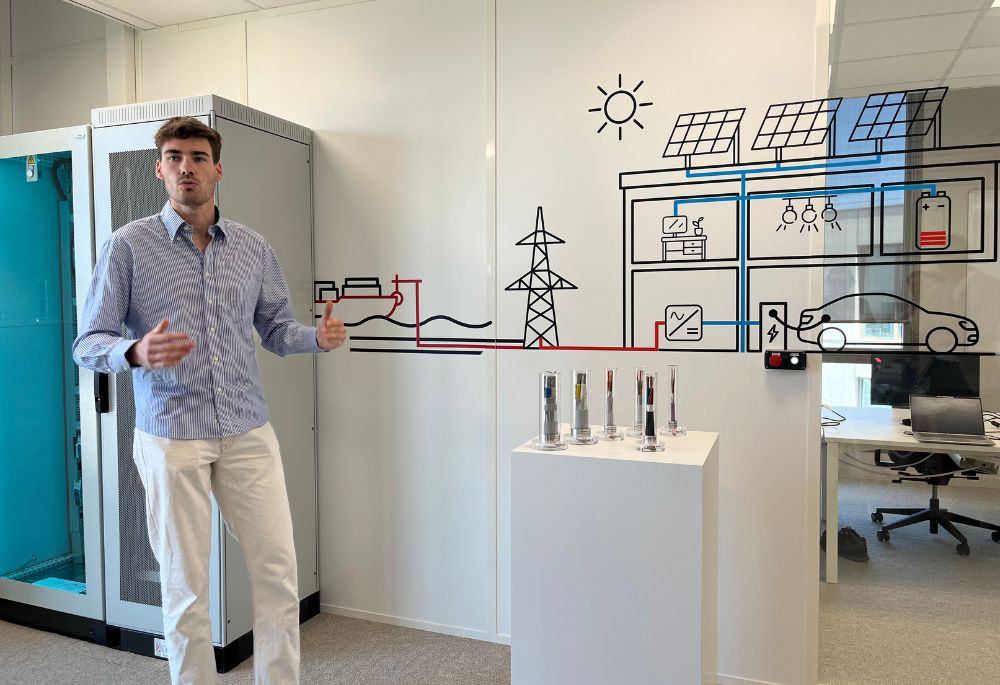
Talk to a Nexans DC specialist. Whether you are designing a new building, specifying a data center or managing a pilot project, we have the cables, the expertise and the ecosystem partners to support you. DC is already live at our own AmpaCity facility, the proof that the transition is real, and happening now.
July 2026
Direct Current (DC) Microgrid: AmpaCity