
- Chantiers de l’Atlantique, France Energies Marines, Fondation OPEN‑C, GE Vernova, Nexans, RTE and SuperGrid Institute are combining their expertise to prepare future high‑power, floating, high‑voltage direct current (HVDC) grid connections.
- The RHODÉ project aims to develop and test the key technological building blocks (transformer, gas-insulated substation, offshore AC/DC converter station, dynamic HVDC cable) required for a first high-power floating connection.
- The project will deliver two floating substation designs, rated at 320 kV and 525 kV respectively.
- The project will help to establish a world-class French industrial sector for offshore wind power.
Chantiers de l’Atlantique, France Energies Marines, Fondation OPEN‑C, GE Vernova, Nexans, RTE and SuperGrid Institute announce the launch of RHODÉ (Raccordement HVDC Offshore Distant Électrique), a collaborative R&D project dedicated to developing future high‑voltage direct current (HVDC) floating electrical connections for large‑scale offshore wind farms installed in deep waters, far from the coast.
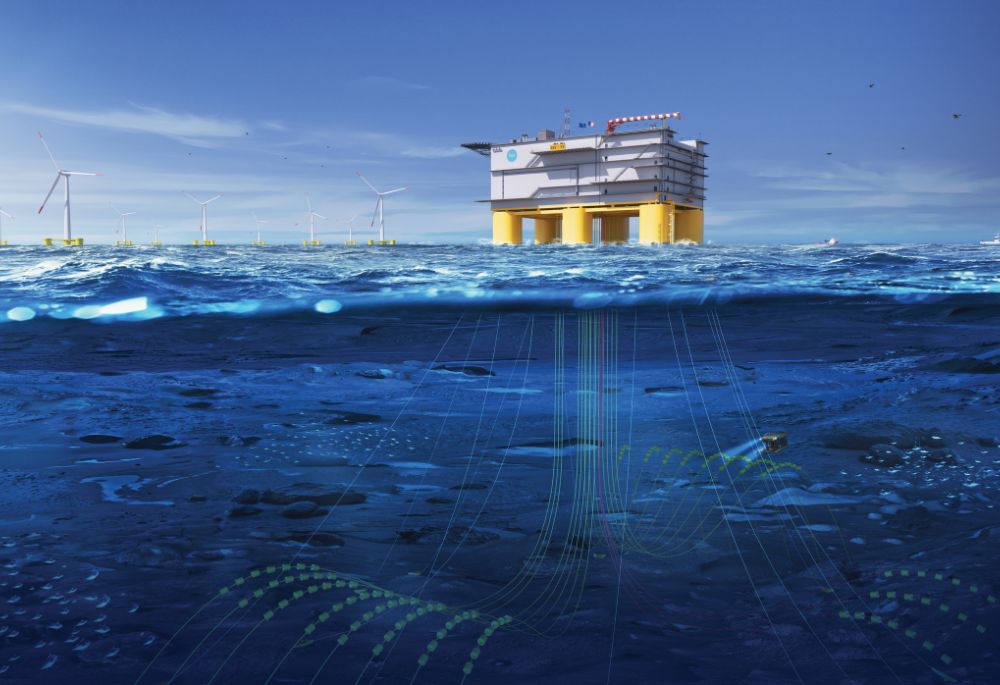
© RTE – Agence MIP
A project at the heart of France’s offshore wind ambitions
The largescale deployment of offshore wind, in France as well as internationally, is potentially leading to the development of sites located at depths greater than 100 metres and several tens of kilometres from the coastline. Under these conditions, traditional solutions with fixed bottom substations may reach their technical and economic limits. Floating electrical substations are emerging as an alternative or additional solution to enable the continued development of offshore wind while controlling costs, environmental impacts and coexistence with other maritime activities.
In this context, RHODÉ forms the missing link between research projects already underway and the industrial realisation phase of the first 320 kV or 525 kV floating HVDC connections, envisaged from 2040 onwards.
To develop and validate the key technological building blocks of a high‑voltage floating electrical connection (320 kV or 525 kV) in high‑voltage direct current (HVDC).
To pave the way for the emergence of a French industrial sector specialising in high‑power offshore floating electrical connections, that is competitive in both French and export markets.
A structured program of R&D, testing and demonstration
The RHODÉ project is organised into several work packages covering the entire value chain, from defining use cases and technical specifications through to the first offshore trials. It combines advanced design work and numerical modelling of the floating HVDC substation and its components, laboratory test campaigns, environmental impact studies on the floating substation in the marine environment, hydrodynamic basin tests on reduced scale models, as well as unit tests at sea to validate the operational feasibility of installation, maintenance and decommissioning concepts.
A consortium covering the full range of skills along the value chain
To address all the challenges, from maritime aspects to the transmission grid, including environment, HVDC conversion and submarine cables, RHODÉ brings together seven partners with complementary expertise:
- Chantiers de l’Atlantique: expertise in the design, construction, integration of various systems and commissioning of offshore substation (topside and foundation).
- France Energies Marines: expertise in the design of moorings, digital twins, decision‑support tools for the operation of offshore substations and environmental impact assessment.
- Fondation OPEN‑C: management of the five offshore test sites in France and expertise in hosting prototypes at sea (infrastructure, including grid connection, operations and maritime safety, environmental monitoring).
- GE Vernova: know‑how in the design and construction of AC/DC substations, transformers, gas‑insulated substations and associated control and protection systems;
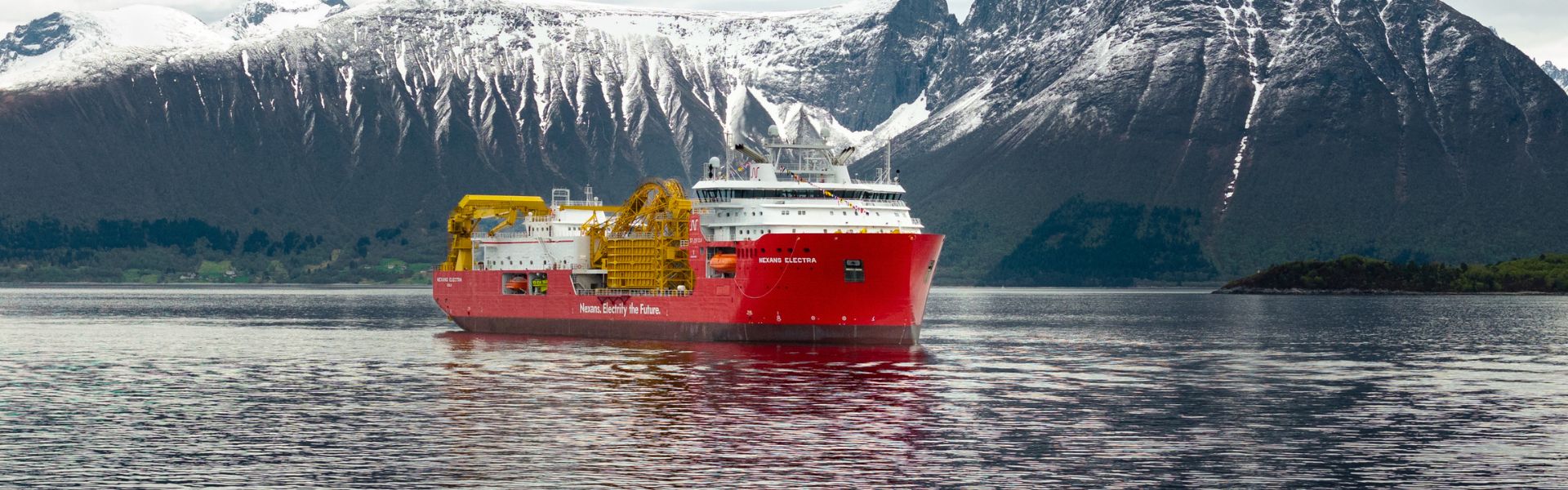
- Nexans: expertise in the design, testing, qualification, manufacturing and installation of dynamic HVDC subsea cable systems and high‑voltage direct current (HVDC) subsea cables.
- RTE: Development, maintenance and operation of the public electricity transmission network.
- SuperGrid Institute: Expertise in the development of SF6-free insulation solutions, the simulation of dielectric stresses associated with the design of HVDC metal-enclosed substations and their interfaces with floating substation components, and the performance of specific dielectric and power tests on this equipment.
The RHODÉ project was awarded a grant of 16 M€.
This project is funded by the French State as part of France 2030 operated by ADEME.