





Nexans’ High Temperature Superconducting technology enters the Science Museum in London
Innovation
01 July 2024
4 min
Science Museum of London

The Science Museum in London is welcoming a sample of Nexans’ superconducting cable to be exhibited in Energy Revolution: The Adani Green Gallery, a new gallery which recently opened. Thanks to their exceptional capacity to carry electricity with almost no losses, High Temperature Superconducting (HTS) cables are already playing a critical role in energy transition as well as in upgrading existing power grids as the world’s energy demand continues to grow. HTS cables are now available for a wide range of applications in power grids.

For over 20 years, Nexans has been successfully developing and deploying HTS cables in the energy infrastructure market. This major innovation has been the centerpiece in a number of recent leading-edge projects around the world, including Chicago’s Resilient Electric Grid. It is currently deployed for the Montparnasse train station in Paris, France, and with SNCF Réseau with a project of superconducting fault current limiter (SFCL) in Bussurel, France.

Nexans superconducting cable at the Science Museum of London. DR. Oliver Carpenter, Curator of Infrastructure & Built Environment, Science Museum of London and Jérôme Fournier, Corporate Vice President Innovation Services & Growth at Nexans

The sample of the superconductor that is displayed in the Science Museum of London comes from the iconic AmpaCity project installed in 2014 in Essen, Germany. AmpaCity was one of the first projects that demonstrated the reliability of the HTS technology in real-life applications. When installed, it was the longest superconductor system in the world. Over the seven years of flawless continuous operation, AmpaCity project illustrated how superconducting technology could revolutionize electricity distribution by reshaping downtown power grids and freeing up high-value real estate.

Now part of the Science Museum Group’s national collection, Nexans’ superconducting cable is included in the new gallery and could later be featured in temporary displays around the world or used for academic research and study. The Science Museum’s landmark Energy Revolution gallery showcases the technologies used in the fastest energy transition in history, driven by the urgency of curbing climate change.


It is a great honor for Nexans and a recognition of our pioneer mindset in the field of energy technology at a worldwide level. For over a century, Nexans has been committed to continuous innovation, designing and producing ever more efficient electrical systems supporting the increasing energy demands. We are convinced that superconductors will play a crucial role in electrifying the world of tomorrow.

Yann Duclot
Yann Duclot

Acceleration Units Director, Nexans

The disruptive superconducting technology

Amidst the growing demand for energy, and especially as the shift from fossil fuels to electricity continues, developing and adapting the existing electrical networks will require new technologies and approaches. For instance, in densely populated areas filled with multiple power grids, as well as telecom and pipe networks, bringing additional power may be very costly and challenging. To address this issue, Nexans developed cables where traditional copper or aluminum conductors are replaced with High Temperature Superconducting (HTS) advanced conductors and wires. Such cables transport three to five times higher currents than traditional cables with lower losses, thus improving the overall efficiency of the power grid. Furthermore, HTS cables do not generate any thermal or electromagnetic impact and can therefore be installed in very narrow passages close to any type of network. They allow to build new power lines while minimizing land take, civil works and nuisances for the neighborhood.

The secret lies in HTS tapes’ amazing property of becoming perfect conductors when cooled down with a continuous flow of liquid nitrogen at -200°C. With minimized impact on the environment, increased capacity at smaller size as well as its proven reliability, superconducting cables can be the most sustainable and cost-effective solution for energy transmission and distribution, especially in constrained locations.

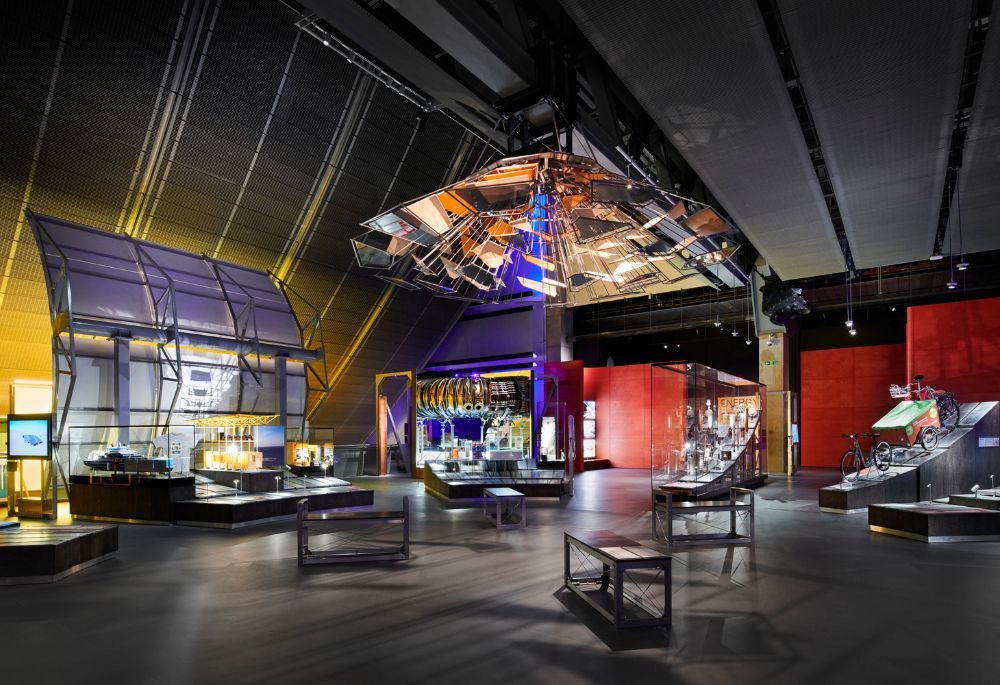
Visitors in Energy Revolution The Adani Green Energy Gallery at the Science Museum

Visitors in Energy Revolution The Adani Green Energy Gallery at the Science Museum ©Science Museum Group

Visitors in Energy Revolution The Adani Green Energy Gallery at the Science Museum

Visitors in Energy Revolution The Adani Green Energy Gallery at the Science Museum©Science Museum Group

Gallery view of Energy Revolution The Adani Green Energy Gallery at the Science Museum

Gallery view of Energy Revolution The Adani Green Energy Gallery at the Science Museum ©Science Museum Group

Latest news

Solar farm in Morocco

Project

16 April 2026

Noor Atlas: key solar project supporting Morocco’s energy transition

Nexans Morocco wins the Noor Atlas solar project, a major milestone for renewable energy in Morocco. A strategic project highlighting the critical role of electrical infrastructure—and strong local industry—in the energy transition.

Nexans Skagerrak cable laying for Fensfjord project

Project

07 April 2026

Nexans completes deep-fjord 420 kV subsea cable project in Norway

A world-first at 530 meters below sea level: discover how Nexans successfully delivered a record-breaking 420 kV subsea cable project in Norway’s challenging fjord environment.

Agathe Pauli

Sponsorship

26 March 2026

“Thanks to Nexans, I can focus on improving, and that changes everything”

Discover how Paralympic swimmer Agathe Pauli’s journey is supported by Nexans as she aims for the podium in future competitions.