



On October 6, 2026, Nexans, RTE, France’s electricity transmission system operator, and Lyon 1 University’s IUT announced the Sustainable Electrical Networks Engineering (IRED) pathway: a two-year work-study Master’s, unique in France, that trains engineers for electrical networks. Part of Lyon 1 University’s Energy Master’s, it combines university teaching, industrial expertise and time spent in a company.
IRED Master’s at a glance
- Program: Sustainable Electrical Networks Engineering (IRED)
- Level: Master’s degree (five years of higher education)
- Format: two-year work-study program, part of Lyon 1 University’s Energy Master’s
- Location: IUT Lyon 1, Lyon, France
- Partners: RTE, IUT Lyon 1 and Nexans
- Industry input: 40% of university teaching designed and delivered by RTE and Nexans experts
- Framework: “Écoles des réseaux pour la transition énergétique” program, backed by France 2030
Why France needs more electrical network engineers
Renewing and expanding electrical networks takes specialized skills as much as infrastructure. A study on jobs and skills in the grid sector, published in 2025 under France 2030 (the French public investment plan), estimates that nearly 2,800 expert-level electrical engineering professionals will need to be recruited in France between 2025 and 2030. The study also highlights the value of dedicated training pathways alongside existing programs.
How the IRED Master’s works
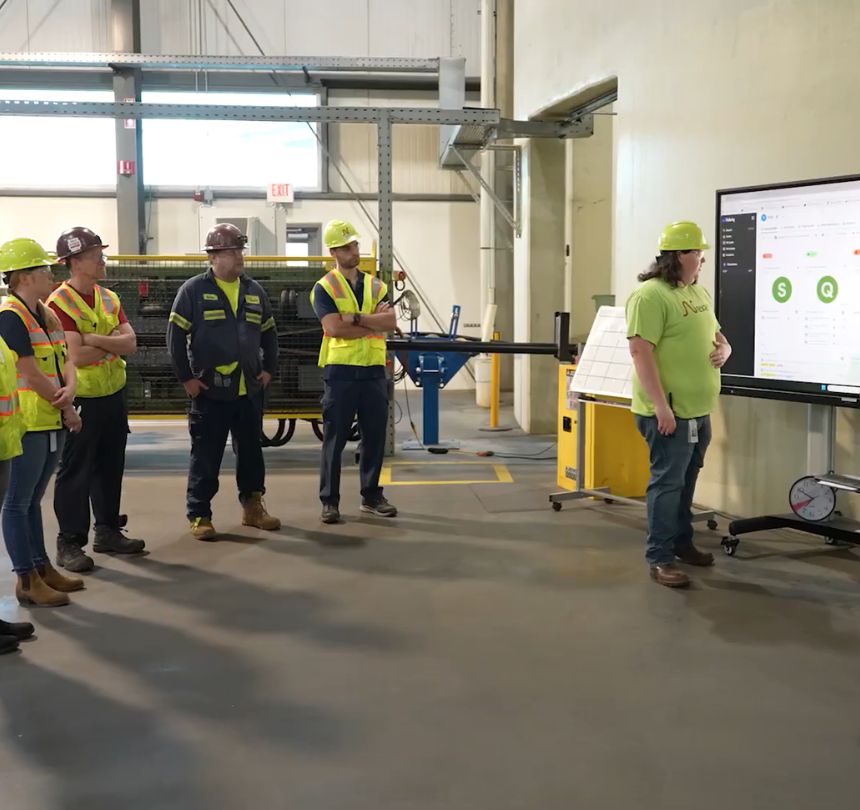
IRED brings together academic courses, industrial expertise and immersion in a company. Over the two years, RTE and Nexans experts design and deliver 40% of the university teaching, keeping students close to the sector’s operational challenges. Modules cover how the electrical system works and power electronics for monitored and smarter grids.
The pathway is part of the “Écoles des réseaux pour la transition énergétique” (Grid Schools for the Energy Transition) program, created by the French grid industry and backed by France 2030. It is based in Lyon, where Nexans has been present since its origins and runs its R&D center.
What careers does the IRED Master’s lead to?
Graduates could move into roles such as electrical engineer, electricity project manager or business development manager, among other careers in the electrical network sector. The pathway complements existing routes into engineering with a strong grid specialization and aims to broaden the range of profiles entering the industry. The sector is also working to make these careers known to all talent, challenge stereotypes and encourage more women to join.
By combining academic excellence and company work-study periods, the IRED Master’s pathway offers students a concrete immersion with professionals while preparing them to become the future experts of electrical networks […] At Nexans, we are proud to contribute to the training of these talents, who will collectively take up the challenges of electrification and help grow an innovative sector open to all talents.

VP Group Innovation, Nexans
Dedicated to the challenges of the energy transition and sustainable development, this program offers maximum employability and an evolving skills foundation essential to understanding the jobs of tomorrow and supporting company transformations.
Director, IUT Lyon 1
Learn more about the IRED Master’s
Latest news

CSR
15 October 2026
Nexans is expanding CableLoop, its electrical cable collection and recycling service, through a partnership with French reuse specialist Vesto. Construction professionals in France gain access to recycling, small-volume collection of any brand and requalification of cables for reuse.