Counterfacts: What the copper debate gets wrong
Circular economy
07 July 2026
4 min
Eight myths about copper and low-carbon cables

Every major industrial shift carries a set of comfortable assumptions about materials, the things that get repeated until they sound like fact. Electrification has its own. Copper is treated as effectively unlimited, recycled metal as a compromise, and a cable’s footprint as a manufacturing question.

Our position paper, Recycling, Circular Economy & Low-Carbon Products, tests those assumptions against the data. Here are eight that don’t hold up, and what the evidence says instead.

Counterfacts - myth #1: copper properties

“Recycled copper can’t match virgin metal”

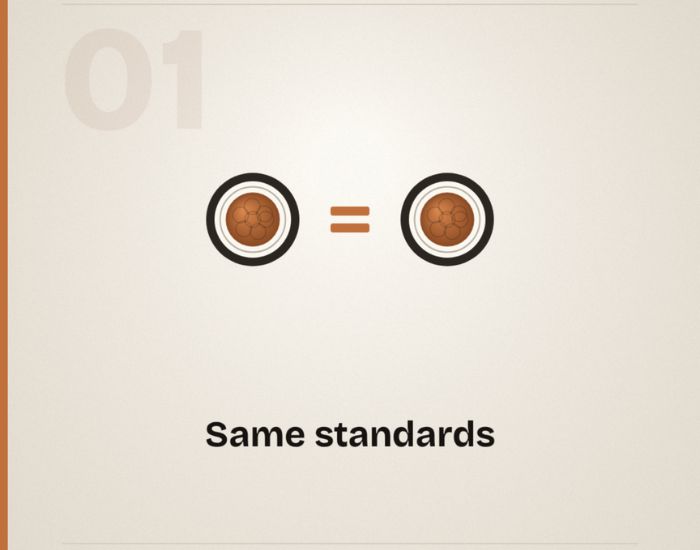
This is the most persistent one, and it gets the engineering backwards. Properly processed, recycled copper and aluminum meet the same electrical and mechanical standards as primary metal. Copper, in particular, is infinitely recyclable and can be reused without losing any of its properties. What sets the quality of a conductor is how the metal is processed and refined, not whether it last existed as ore or as a previous product. For a specifier, recycled content is a sourcing choice with no performance penalty attached.
Counterfacts - myth #2: recyclable indefinitely

“Metal loses quality every time you recycle it”

Some materials degrade a little with each recycling cycle. Copper and aluminum generally do not. They are recyclable indefinitely and can be remelted again and again without losing their intrinsic properties, although small amounts of material may be lost during processing. A copper conductor recovered today can become a copper conductor tomorrow, and the cycle can repeat without an inherent ceiling. That permanence is exactly what makes these two metals suited to a genuine closed loop, and why keeping them in circulation, rather than letting them leave the system, carries so much value.

Counterfacts - myth #3: cable's carbon footprint

“A cable’s carbon footprint is mostly about manufacturing”

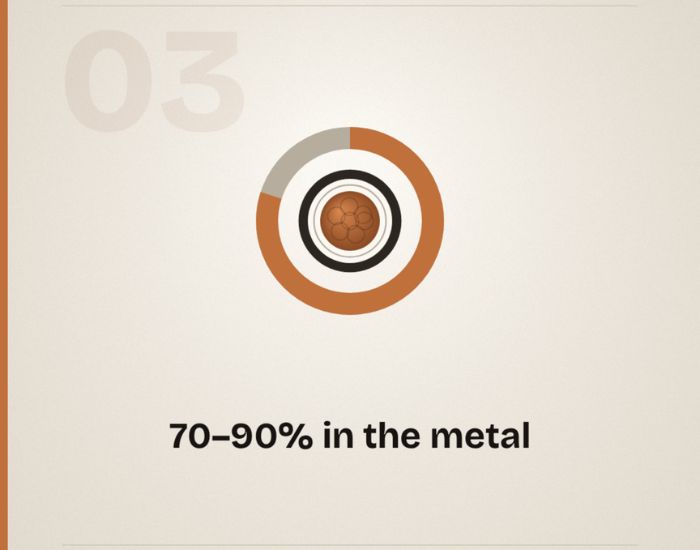
The factory is the visible step, so it draws the attention. The carbon accounting tells a different story. For a typical cable, 70% to 90% of the cradle-to-gate footprint sits in the metal conductors, before manufacturing, packaging or transport are counted. That single fact reorders the priorities. Integrating recycled copper and aluminum, or sourcing low-carbon primary metal, does far more for a cable’s footprint than optimizing any individual production step. When it comes to cable emissions, decarbonizing the metal is one of the levers that matter most.

Counterfacts - myth #4: copper demand

“Recycling can’t keep up with electrification”

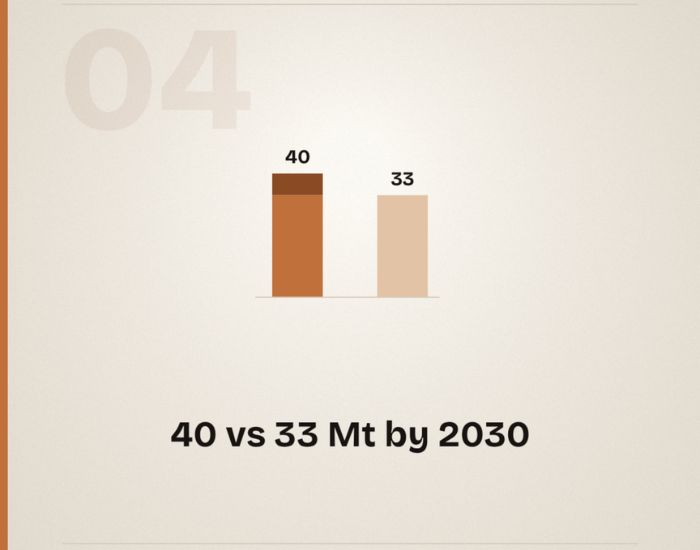
The sheer scale of demand makes people assume recycling is a rounding error against it. The opposite holds. Copper demand is heading toward 40 Mt by 2030, against roughly 33 Mt of primary capacity, a gap that calls for around 10 Mt of additional supply within a decade. Primary mining cannot close that on its own or in time. Recovering and reprocessing metal that is already in circulation is the quickest way to add supply, which makes recycling the structural answer to the gap rather than a side effort.

Counterfacts - myth #5: third-party verification

“You can’t really verify an environmental claim”

Skepticism about green claims is healthy. The response to it is verification. Third-party-verified declarations, PEP Ecopassport and EPD, are built on a product life-cycle analysis carried out to the applicable standards (ISO 14025, 14040 and 14044, and EN 50693 and EN 63366) and are recognized internationally. They make a cable’s footprint measurable and auditable. The figures are standardized and externally checked rather than self-declared. Around 70% of the cables Nexans sells are covered by these declarations, which turns “low-carbon” from a marketing line into a number a buyer can drop straight into their own reporting.

Counterfacts - myth #6: average lead time for a new mine

“If copper supply gets tight, we’ll just mine more”

More primary mining will be part of the answer. It is also the slowest and most carbon-intensive lever, and it does little for resilience while the world waits. The average lead time for a new mine has reached almost 18 years, up from under 13 a decade and a half ago and is trending toward 20 for the most recent discoveries. The shortfall itself arrives this decade. The supply gap will not hold for new capacity to arrive. Widening the sources of metal, keeping what has already been extracted in service and pairing primary with recycled supply, is what closes the gap on a realistic timeline.

Counterfacts - myth #7: circularity is an industrial strategy

“Circularity is a sustainability add-on, not a business strategy”

Filing circularity under corporate responsibility sells it short. For a cable maker it is industrial strategy. Vertical integration down to in-house foundries lets recycled copper and aluminum be reprocessed internally, securing supply and cutting exposure to volatile primary markets. It helps control costs, supports customers’ Scope 3 reporting and disclosure requirements under frameworks such as the CSRD, and turns an environmental commitment into a resilience and competitiveness lever. Nexans commitments behind it are concrete: 25% recycled copper by 2028, around 13,000 tons of polymers recycled a year, on the path to net-zero by 2050.

Counterfacts - myth #8: dual sourcing

“One reliable supplier is enough”

Depending on a single primary source concentrates both price and supply risk in precisely the metal electrification needs most. The more resilient model combines responsibly sourced primary metal with a rising share of recycled content. This dual-sourcing approach is the central recommendation of the position paper, and it delivers two things at once, security of supply and a lower carbon footprint. For buyers, it is also the practical route to their own climate targets, since the embodied carbon of the cables they purchase ultimately contributes to their Scope 3 emissions.

The thread across all eight is the same. The materials question is not a footnote to electrification. It decides whether electrification can be delivered at the pace, and within the carbon budget, the transition demands. Treating recycled metal as second-rate, or copper as limitless, leads to the wrong calls. The evidence points somewhere more useful. Design for the loop, source from more than one place, and measure what you claim.

Nexans cables
Nexans cables

Position paper

Read the evidence in full

Our position paper, Recycling, Circular Economy & Low-Carbon Products, sets out the data, the three-pillar model and the dual-sourcing recommendation behind these counterfacts. Open access, no form to complete.

Download the position paper