
Smart monitoring and AI-powered analysis turn cables and transformers into a dynamic system that anticipates faults before they cause outages. This short video walks through how real-time visibility compounds on top of resilient materials and accessories.
Futureproofing the grid: Why electrification’s success depends on the infrastructure nobody sees
Electrification of tomorrow
13 November 2026
4 min
Quick answer
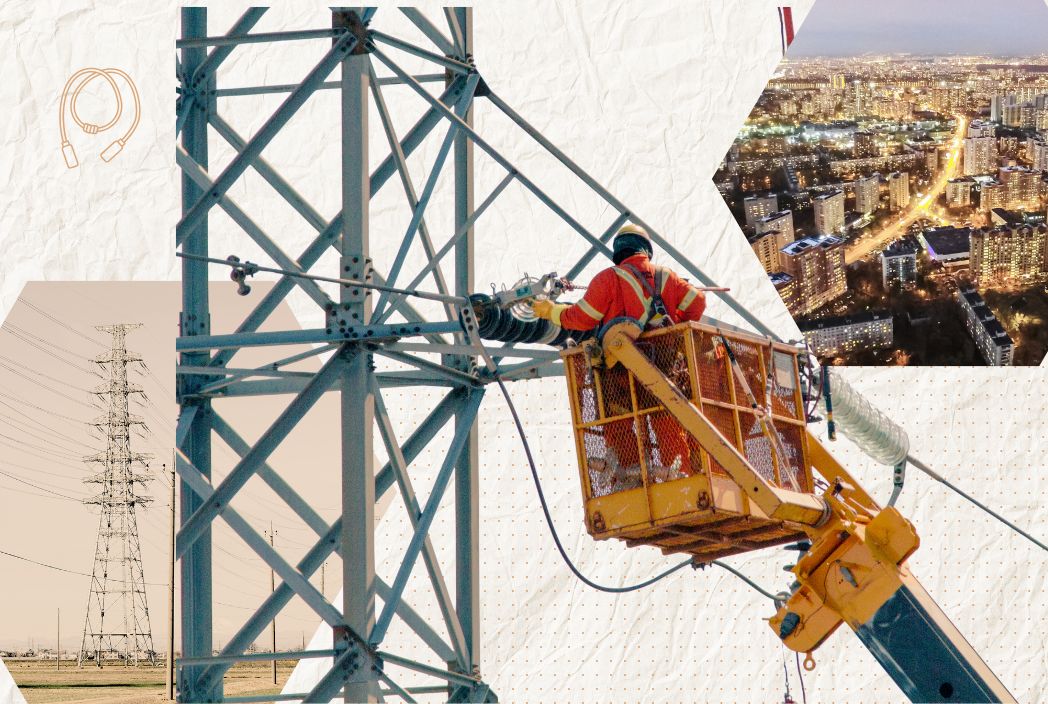
Global electricity consumption is set to grow six times faster than total energy demand over the next decade, driven by data centers, electric vehicles, and population growth. Grid investment isn’t keeping pace: global spending on grids runs at roughly $400 billion a year, against nearly $1,5 trillion for electricity generation. The gap shows up in the headlines (the 2025 Heathrow Airport shutdown, the 2021 Texas winter-storm blackouts) because an aging, overstressed grid is already failing in visible ways. Nexans’ position paper, Futureproofing the Grid for the 21st Century, argues that the real bottleneck in the energy transition lies in modernizing transmission and distribution infrastructure, not simply in building more generation capacity. This requires smarter grid architecture, resilient connecting accessories, and a circular copper supply chain.
6x
demand growth vs total energy demand (IEA)
$400Md
invested yearly in grids, vs ~$1 000Md in generation (World Energy Investment 2025)
+30%
increase in cyberattacks on grid infrastructure (KnowBe4)
See the grid think
From static infrastructure to a self-monitoring, self-regulating network
Framing
The grid is the overlooked half of the energy transition
Most conversations about decarbonization focus on how electricity is produced: more solar, more wind, more nuclear. Producing sustainable power only solves half the problem. That power still has to reach homes, factories, hospitals, and data centers through a transmission and distribution network that, in many regions, predates the smartphone.
Electrification is widely seen as the most realistic path to net zero. It’s more deployable at scale than most alternative decarbonization strategies, many of which require austerity, rationing, or disruption that societies are unlikely to accept. But electrification only works if the grid carrying that electricity can keep up, and today it can’t.
Context
Why electricity demand is outpacing the grid’s ability to deliver it
Three forces are converging on power grids at once, and each alone would be a serious strain.
Demand is accelerating.
An AI-focused hyperscale data center can require as much energy as 100,000 family homes, and electric vehicle adoption, broader digitalization, and growing urban populations are pushing total demand further still on top of the six-times figure above.
The existing infrastructure is aging out.
An estimated 60% of Europe’s grid components are over 30 years old, many installed in a previous century under very different load assumptions. Aging equipment rarely fails gracefully: in 2025, a substation transformer fire caused by moisture ingress shut down London’s Heathrow Airport, one of the world’s busiest, for a full day, and a transmission malfunction in Chile cut power to 99% of the country’s population for 17 hours.
Climate and security risks are compounding the strain.
The 2021 Texas winter storms left 4.5 million homes and businesses without power, some for days, after non-winterized equipment couldn’t handle extreme demand. It was the worst energy infrastructure crisis in the state’s history. The grid has also become a geopolitical target: cyberattacks on grid infrastructure worldwide have risen 30%, with Europe alone recording 48 successful breaches in a single year.
Renewables add a further layer of complexity. Wind and solar are expected to supply over 80% of new generation capacity on the way to net zero, but variable, distributed generation is far harder for an aging, centrally designed grid to manage than a handful of large fossil or nuclear plants ever were.
The gap
The investment gap nobody is talking about
Here is the imbalance at the heart of the problem: for every dollar invested in grids, roughly two and a half go into generation. That is about $400 billion a year for networks, compared with close to $1 trillion for power production. Generation captures most of the capital; transmission and distribution does not, even as reliability metrics such as SAIFI and SAIDI, which track how often and how long outages last, are already climbing across developed economies.
Public initiatives like the European Union’s €1.2 trillion grid upgrade plan show that governments are starting to notice the gap. But in Nexans’ view, closing it takes more than money: it takes a different way of planning grid modernization altogether.
The Nexans method
Reversing the planning model: start with consumption, not production
Traditional grid planning starts with production and works forward. Nexans argues the sequence needs to run in reverse:
- Consumption first: identify where critical demand actually is: data centers, growing cities, industrial clusters.
- Transmission and distribution second: treat the connection between generation and demand as the essential link in the chain, not an afterthought.
- Production last: build the generation source that fits the need and the geography, rather than defaulting to a one-size-fits-all technology choice.
This reversed model also unlocks a practical shortcut: recovering “stranded assets.” Decommissioned coal plants, for example, often sit on transmission corridors that can be retrofitted as interconnection points for offshore wind, turning inactive infrastructure into clean energy hubs without the cost and delay of building new lines from scratch.
See the full modernization framework in the position paper.
Theme 03: Reliability, Built Twice
Reliability, built twice: why performance starts before monitoring
A lot of grid modernization discourse jumps straight to monitoring: sensors, dashboards, AI-driven analytics. Monitoring matters, and Nexans integrates it deeply into its architecture. But Nexans’ core argument is that reliability has to be engineered twice: once at the point of installation and materials, and again through the real-time intelligence layered on top. A perfectly monitored connection that was poorly installed with the wrong materials for its environment is still a failure point; monitoring only tells you about it sooner.
That starts with the parts of the grid that get the least attention: connecting accessories. Historically treated as commodity components, accessories are now being engineered as strategic resilience enablers. They are embedded with sensors, connected to digital twins, and made from high-performance polymers and sealing materials such as EPDM. These innovations help them maintain their integrity under extreme environmental conditions, including UV exposure, salt spray, sand, moisture, and thermal cycling, whether buried, exposed, or submerged offshore. These engineering choices extend infrastructure lifespan and reduce operating costs well before any monitoring system is switched on.
Once that foundation of built-in resilience is in place, real-time visibility compounds it. Smart monitoring and AI-powered analysis of continuous data streams let grid operators anticipate problems, balance loads, and detect faults early, turning static cable-and-transformer networks into self-monitoring, self-regulating systems. The grid reliability software market reflects how fast this shift is accelerating: it’s expected to reach $30 billion by 2032.
Field proof
Proof in the field, not just in theory
Smart cable accessories at scale
A Nexans partner deployed more than 3,000 Smart Cable Guard systems across its medium-voltage grid to tackle aging infrastructure and outage risk. Field data shows each unit prevents over 600 customer-hours lost annually, with fault localization accurate to within 1% of cable length.
Offshore substation fault detection
For remote offshore wind farms, where silent component failures can go undetected until an outage occurs, a global leader in offshore wind integrates cable diagnostics and performance monitoring directly into substations to reduce unplanned downtime.
Digital transformation for distribution operators
A strategic partnership gives distribution network operators a full-spectrum digital toolbox, improving operational awareness, power-quality monitoring, outage-impact minimization, and long-term grid planning in one suite.
Field proof
Proof in the field, not just in theory
Nexans points to concrete, deployed examples rather than hypothetical use cases:
Smart cable accessories at scale
A Nexans partner deployed more than 3,000 Smart Cable Guard systems across its medium-voltage grid to tackle aging infrastructure and outage risk. Field data shows each unit prevents over 600 customer-hours lost annually, with fault localization accurate to within 1% of cable length.
Offshore substation fault detection
For remote offshore wind farms, where silent component failures can go undetected until an outage occurs, a global leader in offshore wind integrates cable diagnostics and performance monitoring directly into substations to reduce unplanned downtime.
Digital transformation for distribution operators
A strategic partnership gives distribution network operators a full-spectrum digital toolbox, improving operational awareness, power-quality monitoring, outage-impact minimization, and long-term grid planning in one suite.
Explore every case study in the full position paper.
Supply chain
Closing the loop: why copper recycling is a grid resilience issue, not just a sustainability one
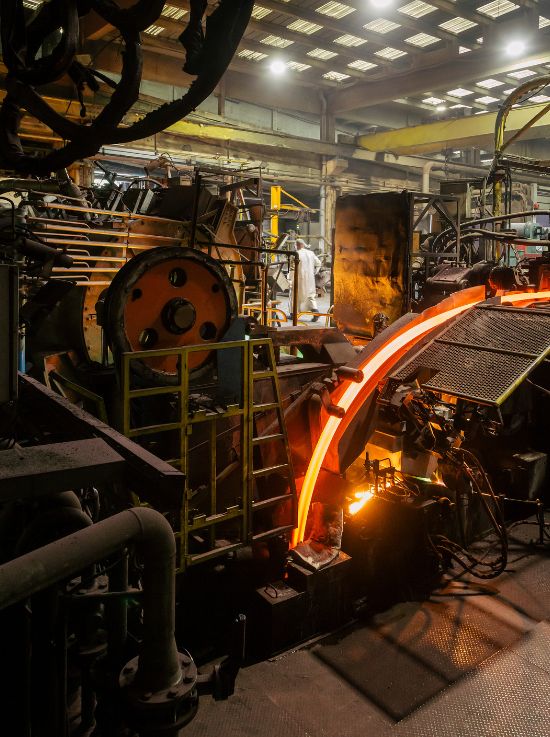
The electrical value chain depends on copper, aluminum, and rare-earth metals, and demand for all of them is rising in lockstep with electrification. Ethical mining matters, but it isn’t sufficient on its own. The future of the supply chain depends on closing the loop.
Nexans is building that loop directly: through RecyCâbles, a joint venture with Suez, and CableLoop, a B2B recycling service, the company recovers copper from client collection points and from “urban mines,” the end-of-life cable infrastructure already in the ground. A recent €90 million investment in a copper rod recycling plant in Lens, France increases Nexans’ wire rod production capacity by more than 50% and lifts the group’s copper scrap recycling capacity to as much as 80,000 metric tons of cable scrap per year. For a sector facing a demand surge and a materials constraint at the same time, circular copper supply isn’t an add-on: it’s part of grid resilience itself.
The bottom line
Futureproofing the grid for the 21st century means working on four fronts at once: planning from consumption backward instead of production forward; engineering reliability into materials and accessories before layering on monitoring; adding AI-driven visibility once that foundation exists; and securing the raw-material supply chain through recycling. Grids are critical infrastructure, and modernizing them is one of the few ways to fight climate change without the austerity or disruption that other decarbonization paths would demand.
Still have questions? The position paper covers it in depth.
FAQ
Frequently asked questions
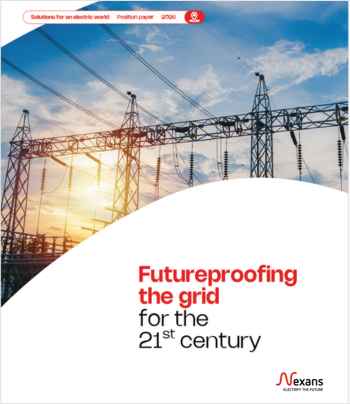
Get the full position paper
Futureproofing the Grid for the 21st Century goes deeper into each of these pressure points: the evidence base, Nexans’ modernization framework, and field-proven case studies, in a single downloadable report.
Download the report (PDF – 20MO)